
Renewing Your Visa In-person and Online in Japan
A straightforward guide to renewing your visa in Japan.
If you’re an Indian who has ever thought about living and working in Japan, now might be your chance. A new agreement between the two countries will bring 50,000 Indian workers to Japan, filling jobs in tech, nursing and manufacturing. It’s a rare opening in a country that has long been difficult for foreigners to enter—and it could be your pathway to a new life.
What’s Actually Happening
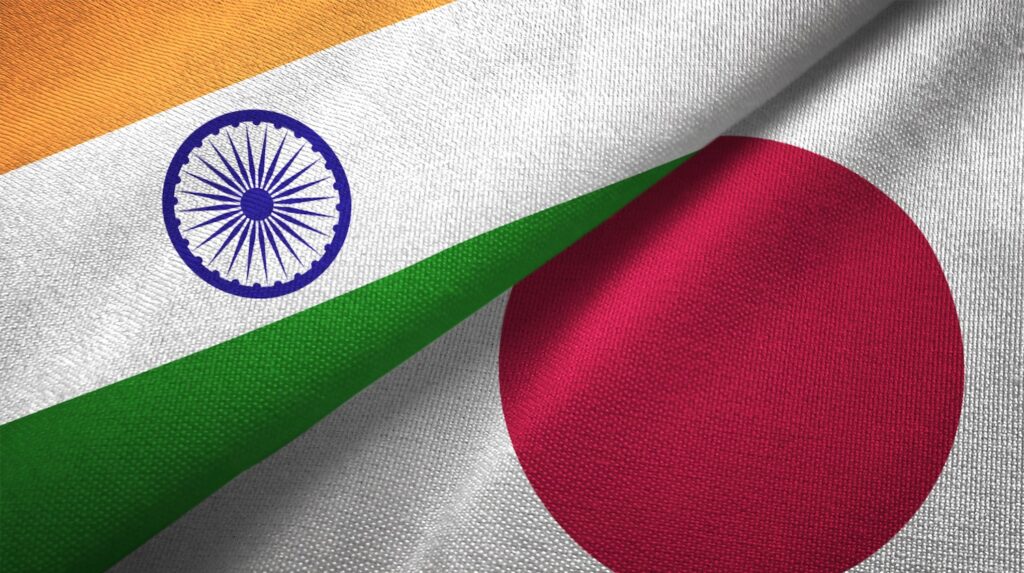
India and Japan have created the “Action Plan for India–Japan Human Resource Exchange.” The goal is for the two countries to exchange half a million people over five years.
- 50,000 Indian workers will move to Japan to fill labor gaps.
- The other 450,000 will include students, researchers and professionals moving both ways (Indians to Japan, and Japanese to India).
For Japan, it’s about survival. With an aging population and a shrinking workforce, the country desperately needs skilled workers to keep its economy running, especially in tech, caregiving and manufacturing. For India, it’s an opportunity. With a young, growing workforce and millions entering the job market every year, the deal creates new career paths abroad in stable, well-paying industries.
Beyond labor, the exchange will ideally strengthen education, research and cultural links, helping Japan and India collaborate in fields like AI, semiconductors and healthcare.
Where The Jobs Are
Recruitment will run through official government channels and employer programs. The main routes are India’s e-Migrate portal, where Japan has now been added as a destination country, and a new India–Japan corridor on the National Career Service platform for job matching with certified Japanese employers. Japanese companies will also recruit directly at Indian universities and job fairs under initiatives like India–Japan Talent Bridge.
To qualify, applicants must pass industry-specific skills exams and a Japanese language test (JLPT N4 or JFT-Basic), with new testing centers opening across India.
IT and Digital Tech
Japan is scrambling to keep up in AI, software development, and semiconductors. The plan mentions explicitly recruitment missions by Japanese companies to Indian universities. If you’re a computer science graduate in Bengaluru or Hyderabad, you may soon see Japanese firms offering campus placements.
Healthcare
Japan’s population is one of the oldest in the world, and the need for caregivers and nurses is getting serious. The government estimates a shortage of more than 300,000 caregivers by 2035. For Indian nurses, this could mean not only higher salaries than at home, but also a direct pathway into a sector that will be hiring for decades.
Construction and Manufacturing
Japan’s factories and building sites rely heavily on foreign trainees. The first group of Indian construction workers arrived back in 2019 under the Technical Intern Training Program. The new plan expands these routes, opening the door for welders, electricians, and factory workers from India.
Hospitality and Services
Restaurants, hotels, agriculture and food processing are also struggling to recruit young Japanese. These industries are expected to see more Indian workers through the new visa channels.
How The Visas Work
There’s no special “India-only” visa. Instead, Indians will apply through existing categories:
- Specified Skilled Worker (SSW): For 16 industries. Requires a skills test and a Japanese language test. Contracts last up to five years with the same pay as Japanese workers.
- Technical Intern Training Program (TITP): A three-to-five-year “learn and earn” scheme, often in factories and construction. It can also lead to an SSW visa later.
- Professional Work Visas: For degree holders in IT, engineering or research, with direct company sponsorship.
The action plan also mentions more test centers across India, government-backed language classes and Japan being added to India’s e-Migrate system to cut down on scams.
Beyond Jobs: Students, Research and Skills
The action plan also focuses on students and researchers. Out of the 500,000 total, a large share will be young people in education or training.
- Scholarships and exchanges: Japan’s MEXT scholarships for Indian students will continue, alongside programs like Sakura Science and the new MIRAI-Setu, which offers month-long internships in Japanese companies.
- University partnerships: Japanese universities are launching new exchange projects with Indian counterparts, encouraging joint research in areas like AI and semiconductors.
- Youth science exchanges: Under new science and technology initiatives, high school students from India will be invited to short-term visits to Japanese institutions.
- Language and culture: Japan is scaling up Japanese-language education in India with more test centers, teacher training and course subsidies.
There’s also a skill-development angle. Japan will fund vocational training in India, run job fairs and establish “Centers of Excellence” in Yoga and Ayurveda, which are seen as helpful in promoting wellness, especially in elderly care.
How Japanese People Feel About It
As expected, the announcement sparked a reaction from right-wing nationalists. Some claimed the deal meant “mass immigration” and spread racist tropes, such as “Japanese women would be unsafe.” An online petition opposing the plan gained 10,000+ signatures.
Many ordinary Japanese people on Twitter/X have bought into the misinformation wave currently going through Japan
and expressed fear, citing crime and job loss worries. Others pointed
out that Japan already has over 50,000 Indians, and the increase is
small compared to the overall foreign population.
Check Japan protest Video
Japan’s leading business federation, Keidanren, has formally welcomed the agreement. In a joint statement with India’s CII, they urged companies to invest in Japanese language training, inclusive work environments, and internal support systems to retain Indian talent.
Others, like the Japanese Communist Party, have voiced concern that foreign workers could be treated as cheap labor, calling instead for protections such as equal pay, language education and family visas.
Indians Building a Life in Japan

Namste India Fest in Tokyo
Regardless of what you see from online trolls, the reality on the ground is often different. Yes, some Japanese worry about immigration—but the loudest voices are usually the smallest minority. Day to day, most Japanese people are polite, curious and supportive toward foreigners who live and work in their communities.
Japan already has nearly 54,000 Indian residents. In Tokyo’s Nishi-Kasai, often called “Little India”, you’ll find Indian schools, spice shops and temples. Other hubs include Yokohama, Kawasaki, Kobe and Osaka. Community groups such as the All-Japan Association of Indians (AJAI) host Diwali festivals and networking events, while international schools in Tokyo and Yokohama offer CBSE or IB programs.
Contact Nikhil Kun: CALL NIKHIL KUN
Are you excited about Japan and India’s new partnership? Let us know in the comments below.