
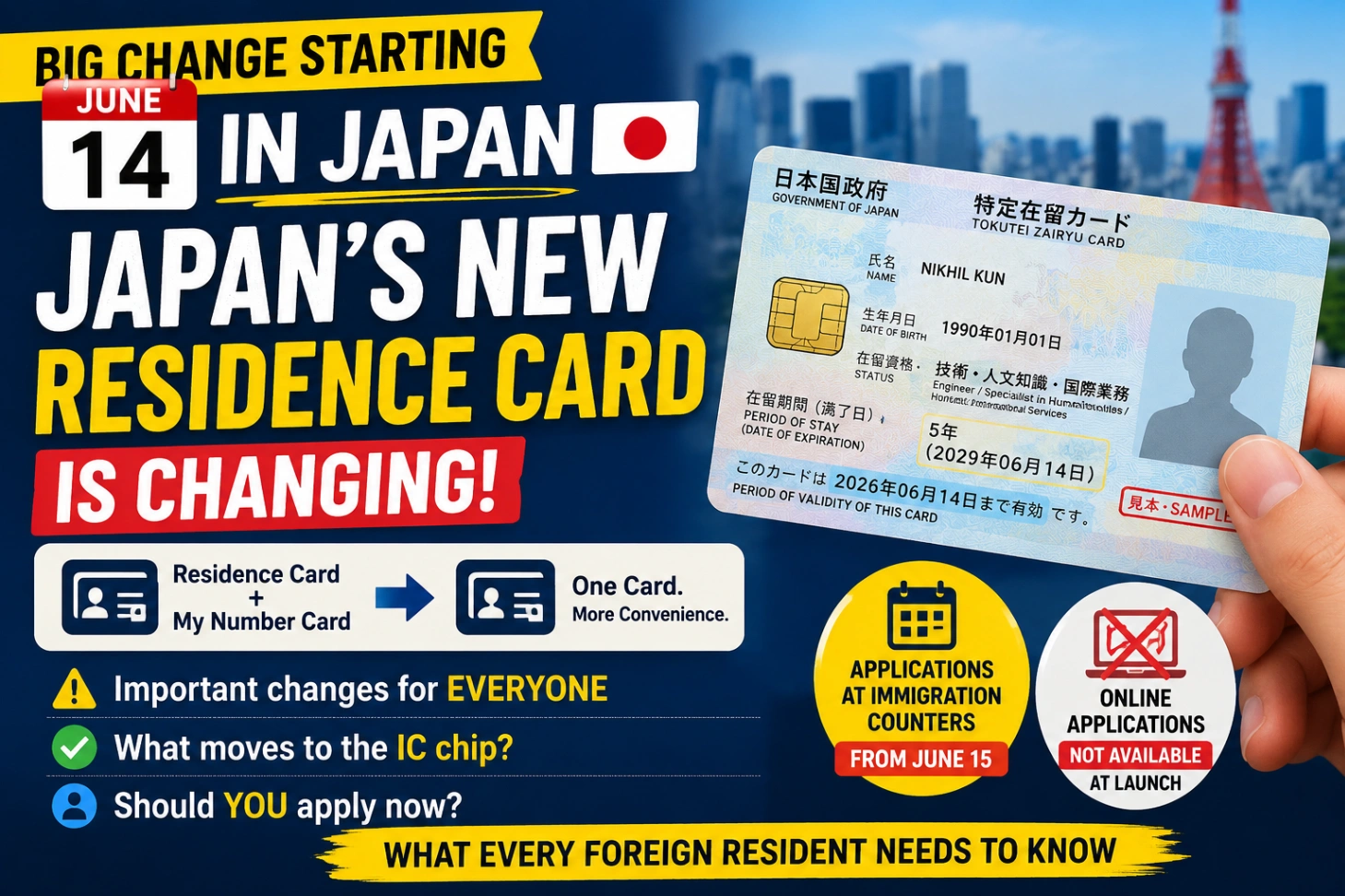
Japan’s New Tokutei Zairyu Card Explained (2026 Guide for Foreign Residents)
If you’ve been living in Japan for a while, you’ve probably become familiar with carrying two important cards everywhere:
- Your Residence Card (在留カード)
- Your My Number Card (マイナンバーカード)
Well, that is about to change.
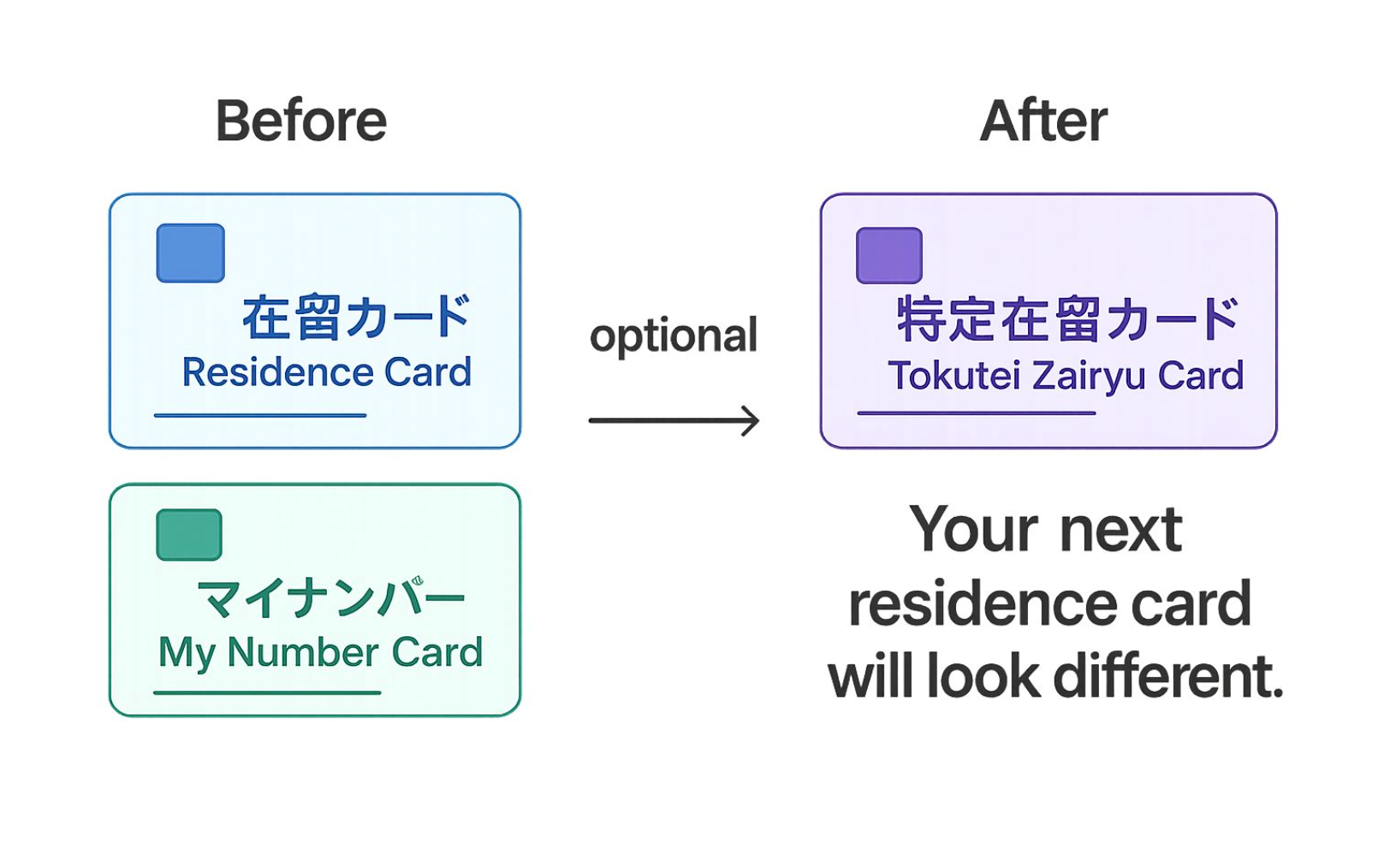
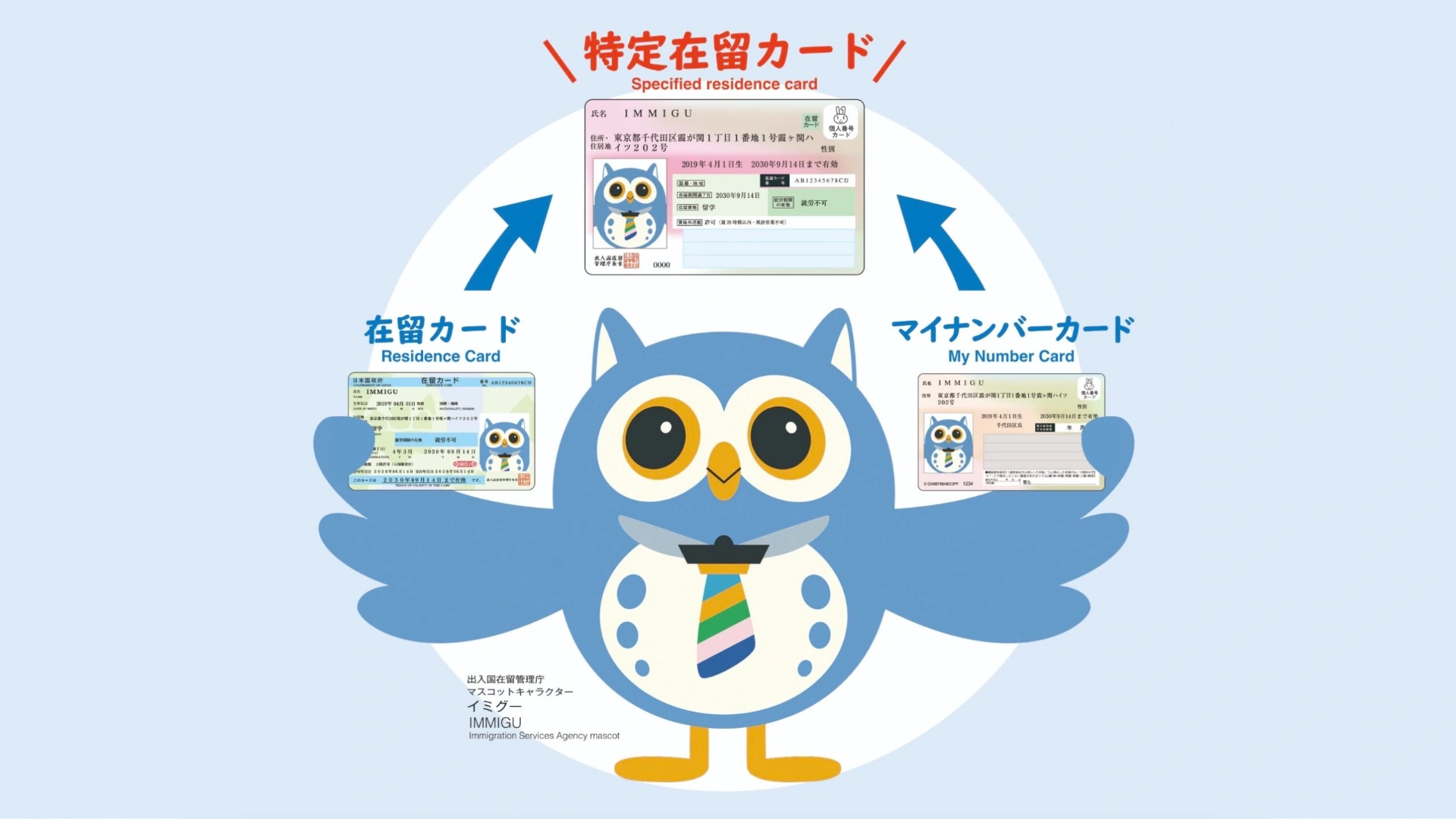
Starting June 14, 2026, Japan is introducing a new system called the Tokutei Zairyu Card (特定在留カード), which combines both cards into a single card for eligible foreign residents. The goal is simple: reduce paperwork, simplify government procedures, and make life easier for foreigners living in Japan. (Ministry of Justice Japan)
But here’s the important part:
You are not required to switch immediately.
In fact, even if you never apply for the new integrated card, some major changes are still coming that every foreign resident should understand.
Let’s break everything down.
Why Japan Is Introducing This New Card
For years, foreign residents have had to update information separately with Immigration Services and their local city office.
For example:
- Renew your visa → visit Immigration
- Update My Number information → visit City Hall
- Change your address → multiple administrative steps
The Japanese government wants to reduce this duplication.
The new Tokutei Zairyu Card combines the functions of:
- Residence Card
- My Number Card
into one document, allowing certain updates to be handled more efficiently. Ministry of Justice Japan
.gif?alt=media&w=3840)
What Exactly Is the Tokutei Zairyu Card?
Think of it as:
Residence Card + My Number Card = One Combined Card
The card functions as both:
- Your legal proof of residence status
- Your My Number identification card
- Your digital government access card
- Your health insurance card (where applicable)
- Your digital authentication card for government services (Ministry of Justice Japan)
For many foreigners, this means carrying only one card instead of two.
Is It Mandatory?
No.
This is probably the biggest question people are asking.
The Japanese Immigration Services Agency clearly states that obtaining a Tokutei Zairyu Card is completely optional. Foreign residents may continue using:
- A standard Residence Card
- A separate My Number Card
just as they do today. (Ministry of Justice Japan)
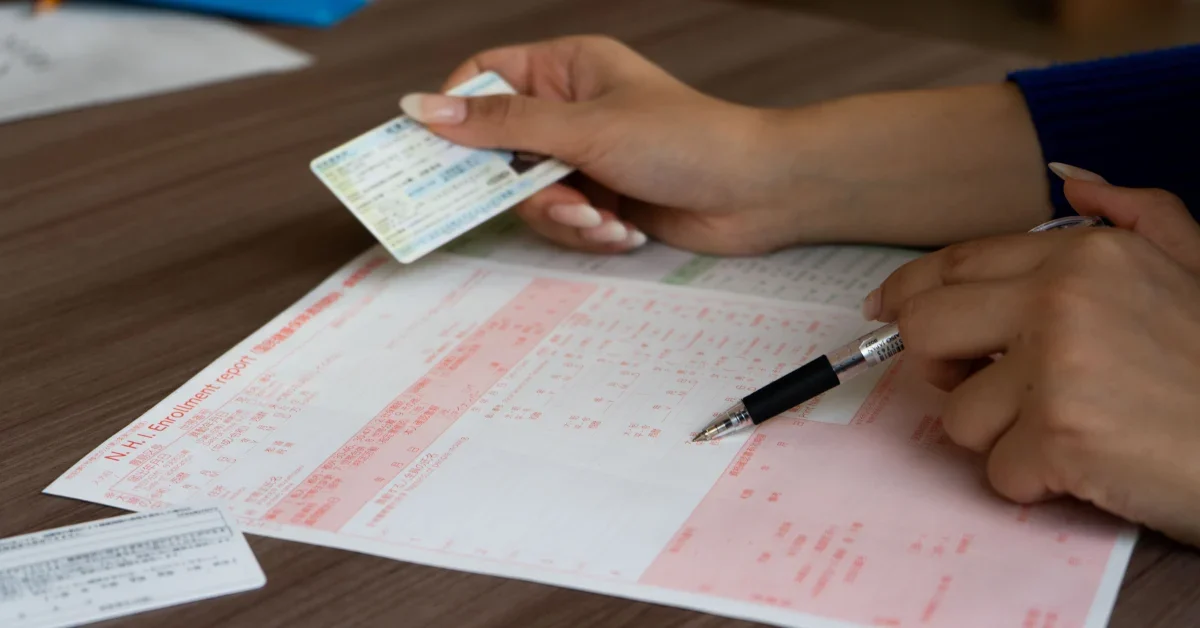
So if you’re happy with your current setup, there is no pressure to switch.
The Bigger Change Nobody Is Talking About
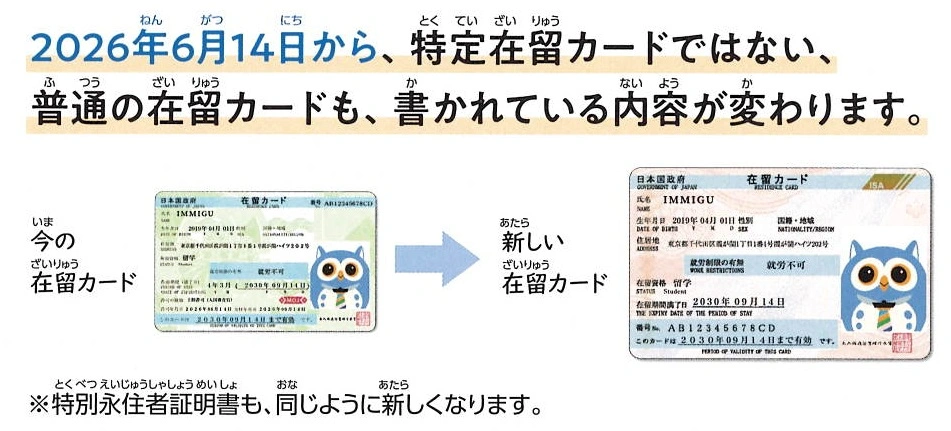
Even if you never apply for the new integrated card, your future Residence Card will look different.
Starting June 14, 2026, newly issued Residence Cards will no longer display several pieces of information on the card surface.
The following items will move into the IC chip:
- Period of Stay (在留期間)
- Type of Permission
- Permission Date
- Card Issue Date (Ministry of Justice Japan)
This means that when someone physically looks at your Residence Card, they may not immediately see information they are used to checking.
Why This Could Cause Problems Initially
Let’s be realistic.
Many organizations in Japan still rely heavily on visual confirmation.
Examples include:
Employers
HR departments often verify:
- Visa category
- Expiration date
- Work eligibility
by simply looking at your Residence Card.
Banks
When opening accounts, banks commonly inspect the card directly.
Real Estate Agencies
Landlords and agents frequently request copies of Residence Cards during rental applications.
Mobile Phone Companies
Visa validity is often checked before approving contracts.
The challenge?
Many employees may not initially realize that some information has moved to the IC chip. (Ministry of Justice Japan)
This could create confusion during the first few months after implementation.
How Can People Verify Your Status?
Japan’s Immigration Services Agency will provide a free card-reading application.
Using a smartphone with NFC functionality, authorized users can read information stored in the IC chip and verify residency details.
However, adoption may take time.
If you renew your Residence Card after June 14, don’t be surprised if an employer, bank, or landlord says:
“Your expiration date isn’t on the card.”
That’s because the system has changed—not because anything is wrong.
Who Should Consider Getting the New Tokutei Zairyu Card?
Not everyone needs it immediately.
But for some people, it makes a lot of sense.
1. People Renewing Their Visa Soon
This is probably the most practical group.
If you’re already:
- Renewing your status of residence
- Changing visa categories
- Updating residency information
you can often apply for the integrated card as part of that process.
Instead of handling Immigration and My Number updates separately, you can streamline the process.
2. Long-Term Residents
If you’ve built your life in Japan and regularly deal with:
- Banking
- Government services
- Tax filings
- Health insurance
- Digital authentication
then carrying a single card may simply be more convenient.
3. Digital-First Residents
Japan continues pushing digital government services through:
- My Number Portal
- Online tax filing
- Health insurance integration
- Digital identity verification
The integrated card aligns with this direction and may become increasingly useful over time.
Who Should Probably Wait?
If:
- Your visa was recently renewed
- You rarely use My Number services
- You prefer keeping systems separate
there is no urgent reason to switch.
Your current Residence Card remains valid until its expiration date.
Important Limitation: No Online Application at Launch
One detail many people miss:
The integrated card cannot initially be requested through Japan’s online residence application system.
Applications must be made through the designated procedures at Immigration offices or eligible municipal offices.
So if you were hoping to complete everything online, you’ll need to wait for future updates.
What Happens If You Lose It?
Since the Tokutei Zairyu Card combines two important identities into one card, losing it becomes more serious.
You’ll need to:
- Report the loss
- Follow My Number suspension procedures
- Complete Residence Card replacement procedures
The recovery process is more involved than replacing a normal Residence Card alone.

This is another reason some people may prefer keeping separate cards.
My Personal Take
After helping thousands of foreigners navigate life in Japan through this blog, I’ve learned one thing:
The best administrative decision is usually the one that reduces future paperwork.
If you’re already planning:
- A visa renewal
- A residence status change
- An address update
then applying for the Tokutei Zairyu Card is probably worth considering.
However, if everything is stable and your current documents work perfectly, there’s no need to rush.
The more important thing right now is simply understanding that Residence Cards issued after June 14, 2026 will look different.
That alone will likely create confusion at workplaces, banks, and rental agencies during the transition period.
Being informed puts you ahead of the curve.
Key Dates to Remember
June 14, 2026
- Tokutei Zairyu Card system officially starts
- New Residence Card design begins
- Certain information moves from card surface to IC chip (Ministry of Justice Japan)
June 15, 2026
- Immigration offices begin accepting applications for Tokutei Zairyu Cards (Ministry of Justice Japan)
Final Thoughts
Japan’s immigration system doesn’t change often, so when it does, it’s worth paying attention.
The new Tokutei Zairyu Card is not just another administrative update—it signals Japan’s move toward a more digital and integrated identity system for foreign residents.
For most people, nothing changes immediately.
But the next time you renew your visa, change your address, or interact with a bank or employer, you’ll probably notice the difference.
And if you’re living in Japan long-term, this is one of those changes you’ll want to understand before everyone else does.
Have questions about your visa renewal, permanent residency, spouse visa, highly skilled professional visa, or life in Japan as a foreign resident?
Feel free to reach out.
As always, I’ll continue sharing practical updates that make life in Japan easier for the international community.