
When You Should Visit JAPAN?
Japan changes its mood with the seasons. One month you can be chasing cherry blossoms, another you’re sweating through a summer festival, and by autumn the mountains are turning gold and red.
So when should you go? It depends on what you want from the trip. Here’s my month-by-month guide to Japan’s weather, crowds, and seasonal highlights, with average temperatures for a few popular places.
Weather figures are averages. Conditions can vary from year to year.
January
| City | Average Daytime High |
Average Nighttime Low |
Rainy/Snowy Days | Sunny Days | ||
|---|---|---|---|---|---|---|
| Early month | Late month | Early month | Late month | |||
| Sapporo | -1°C (30°F) | -8°C (18°F) | 60% | 60% | 40% | 35% |
| Tokyo | 10°C (50°F) | 2°C (36°F) | 15% | 15% | 75% | 70% |
| Takayama | 3°C (37°F) | -5°C (23°F) | 50% | 40% | 30% | 40% |
| Osaka | 9°C (48°F) | 3°C (37°F) | 20% | 20% | 60% | 55% |
| Fukuoka | 10°C (50°F) | 3°C (37°F) | 25% | 30% | 40% | 35% |
| Naha | 19°C (66°F) | 14°C (57°F) | 35% | 35% | 35% | 30% |
January is cold, especially in northern Japan. Sapporo averages around −1°C (30°F) during the day, while Tokyo is milder at about 10°C (50°F). Expect snow in Hokkaido and along parts of the Sea of Japan coast.
After the New Year holiday period, January can be a lovely time to explore. The weather is often sunny and dry, and popular sightseeing spots tend to be quieter. It’s also a great month for skiing and other winter activities.

One thing to plan around: many shops, restaurants, and attractions close for at least a day between December 29 and January 4. Winter days are short too, so make the most of the daylight.
February
| City | Average Daytime High |
Average Nighttime Low |
Rainy/Snowy Days | Sunny Days | ||
|---|---|---|---|---|---|---|
| Early month | Late month | Early month | Late month | |||
| Sapporo | 0°C (32°F) | -7°C (19°F) | 55% | 60% | 45% | 45% |
| Tokyo | 10°C (50°F) | 2°C (36°F) | 15% | 25% | 70% | 65% |
| Takayama | 4°C (39°F) | -5°C (23°F) | 45% | 45% | 45% | 45% |
| Osaka | 9°C (48°F) | 3°C (37°F) | 15% | 25% | 60% | 55% |
| Fukuoka | 11°C (52°F) | 4°C (39°F) | 25% | 30% | 55% | 45% |
| Okinawa (Naha) | 19°C (66°F) | 14°C (57°F) | 35% | 40% | 30% | 35% |
February stays chilly, but it’s a great pick for winter scenery and sports. Sapporo averages around 0°C (32°F) by day, while Tokyo is around 10°C (50°F).
Hokkaido’s drift ice and Shirakawa-go’s snow-covered farmhouses make for unforgettable winter views. In many other parts of Japan, the weather is usually dry and sightseeing spots are less crowded. Bring warm layers, though. You’ll feel those cold evenings.
March
| City | Average Daytime High |
Average Nighttime Low |
Rainy/Snowy Days | Sunny Days | ||
|---|---|---|---|---|---|---|
| Early month | Late month | Early month | Late month | |||
| Sapporo | 4°C (39°F) | -4°C (25°F) | 50% | 40% | 55% | 50% |
| Tokyo | 13°C (55°F) | 5°C (41°F) | 25% | 35% | 60% | 55% |
| Takayama | 9°C (48°F) | -2°C (28°F) | 45% | 45% | 55% | 50% |
| Osaka | 13°C (55°F) | 5°C (41°F) | 30% | 35% | 60% | 55% |
| Fukuoka | 14°C (57°F) | 6°C (43°F) | 35% | 35% | 50% | 50% |
| Okinawa (Naha) | 21°C (70°F) | 16°C (61°F) | 35% | 40% | 40% | 30% |
Spring starts showing up in March. Plum blossoms appear first, and the weather gradually gets milder. In Tokyo, daytime temperatures average about 13°C (55°F).
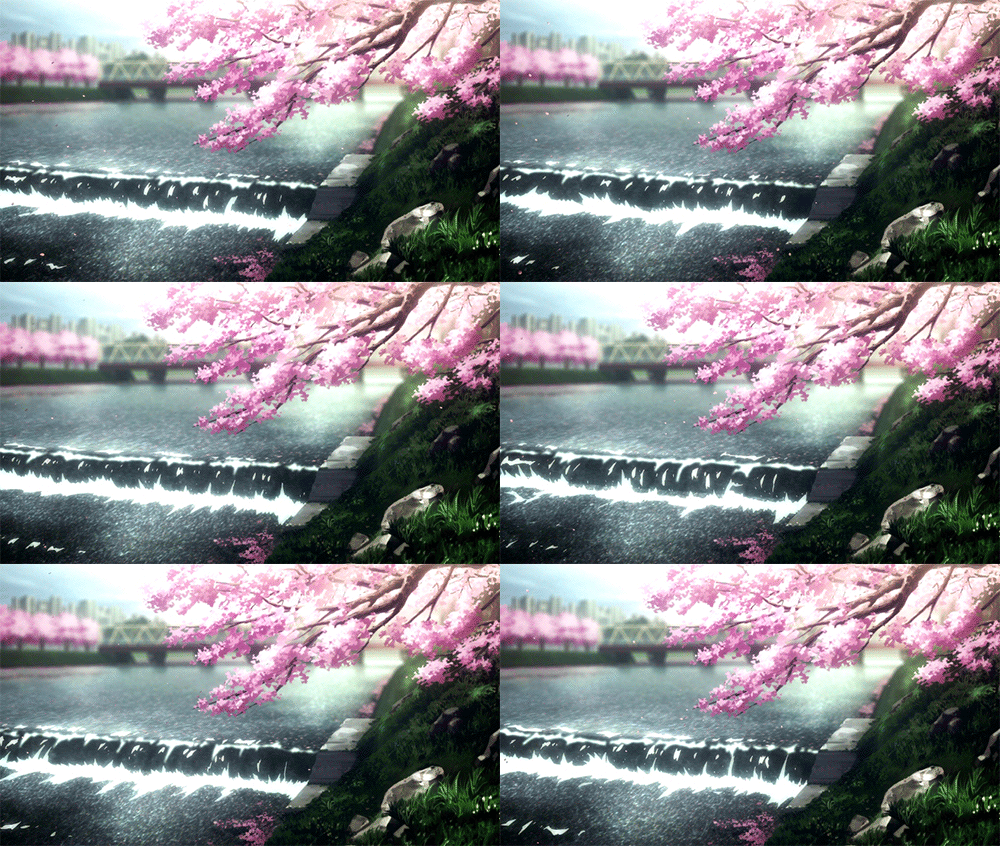
Cherry blossom season can begin toward the end of the month in some regions, while northern Japan may still have good snow for winter sports. Keep in mind that school holidays bring more domestic travel later in March.
April
| City | Average Daytime High |
Average Nighttime Low |
Rainy/Snowy Days | Sunny Days | ||
|---|---|---|---|---|---|---|
| Early month | Late month | Early month | Late month | |||
| Sapporo | 11°C (52°F) | 3°C (37°F) | 30% | 30% | 55% | 50% |
| Tokyo | 18°C (64°F) | 11°C (52°F) | 35% | 35% | 55% | 55% |
| Takayama | 17°C (63°F) | 3°C (37°F) | 40% | 35% | 55% | 55% |
| Osaka | 20°C (68°F) | 11°C (52°F) | 35% | 30% | 60% | 60% |
| Fukuoka | 19°C (66°F) | 11°C (52°F) | 35% | 35% | 55% | 55% |
| Okinawa (Naha) | 24°C (75°F) | 19°C (66°F) | 40% | 35% | 35% | 45% |
April is one of Japan’s most popular months, and it’s easy to see why. The weather is mild, cherry blossoms brighten many places, and the whole country feels ready for spring. Tokyo averages around 18°C (64°F) during the day.
It’s also a busy month. Cherry blossom season draws visitors, and travel picks up around the spring school holidays and the start of Golden Week. Book ahead if your trip dates are fixed.
May
| City | Average Daytime High |
Average Nighttime Low |
Rainy/Snowy Days | Sunny Days | ||
|---|---|---|---|---|---|---|
| Early month | Late month | Early month | Late month | |||
| Sapporo | 17°C (63°F) | 8°C (46°F) | 30% | 30% | 55% | 50% |
| Tokyo | 23°C (73°F) | 15°C (59°F) | 30% | 35% | 50% | 50% |
| Takayama | 22°C (72°F) | 9°C (48°F) | 35% | 35% | 55% | 55% |
| Osaka | 24°C (75°F) | 15°C (59°F) | 35% | 30% | 60% | 60% |
| Fukuoka | 24°C (75°F) | 15°C (59°F) | 30% | 30% | 55% | 60% |
| Okinawa (Naha) | 26°C (79°F) | 22°C (72°F) | 30% | 40% | 45% | 40% |
After the Golden Week rush in late April and early May, the rest of May is one of my favorite times to visit. The weather is warm but still comfortable, the greenery is lush, and many places feel less crowded.
Tokyo averages around 23°C (73°F) by day. Spring arrives later in Hokkaido, while Okinawa’s rainy season usually begins in early May.
June
| City | Average Daytime High |
Average Nighttime Low |
Rainy/Snowy Days | Sunny Days | ||
|---|---|---|---|---|---|---|
| Early month | Late month | Early month | Late month | |||
| Sapporo | 21°C (70°F) | 12°C (54°F) | 25% | 20% | 55% | 50% |
| Tokyo | 25°C (77°F) | 19°C (66°F) | 35% | 45% | 45% | 25% |
| Takayama | 26°C (79°F) | 15°C (59°F) | 30% | 45% | 55% | 30% |
| Osaka | 27°C (81°F) | 20°C (68°F) | 30% | 45% | 55% | 35% |
| Fukuoka | 27°C (81°F) | 19°C (66°F) | 25% | 50% | 55% | 35% |
| Okinawa (Naha) | 29°C (84°F) | 25°C (77°F) | 45% | 25% | 40% | 60% |
June brings the rainy season to most of Japan, except Hokkaido. It doesn’t pour every day, but cloudy skies and showers are common. Tokyo averages around 25°C (77°F).
July
| City | Average Daytime High |
Average Nighttime Low |
Rainy/Snowy Days | Sunny Days | ||
|---|---|---|---|---|---|---|
| Early month | Late month | Early month | Late month | |||
| Sapporo | 25°C (77°F) | 17°C (63°F) | 25% | 25% | 40% | 45% |
| Tokyo | 29°C (84°F) | 23°C (73°F) | 35% | 30% | 30% | 40% |
| Takayama | 29°C (84°F) | 19°C (66°F) | 55% | 40% | 35% | 50% |
| Osaka | 31°C (88°F) | 24°C (75°F) | 40% | 25% | 45% | 60% |
| Fukuoka | 31°C (88°F) | 24°C (75°F) | 40% | 30% | 40% | 60% |
| Okinawa (Naha) | 31°C (88°F) | 26°C (79°F) | 25% | 30% | 80% | 80% |
Rainy weather doesn’t have to spoil your plans. A hot spring stay in Hakone or a visit to the forested temple mountain Koyasan can feel especially peaceful in the mist. Hokkaido is a good option if you want to dodge much of the rain, and Okinawa usually starts getting sunnier again toward the end of the month.
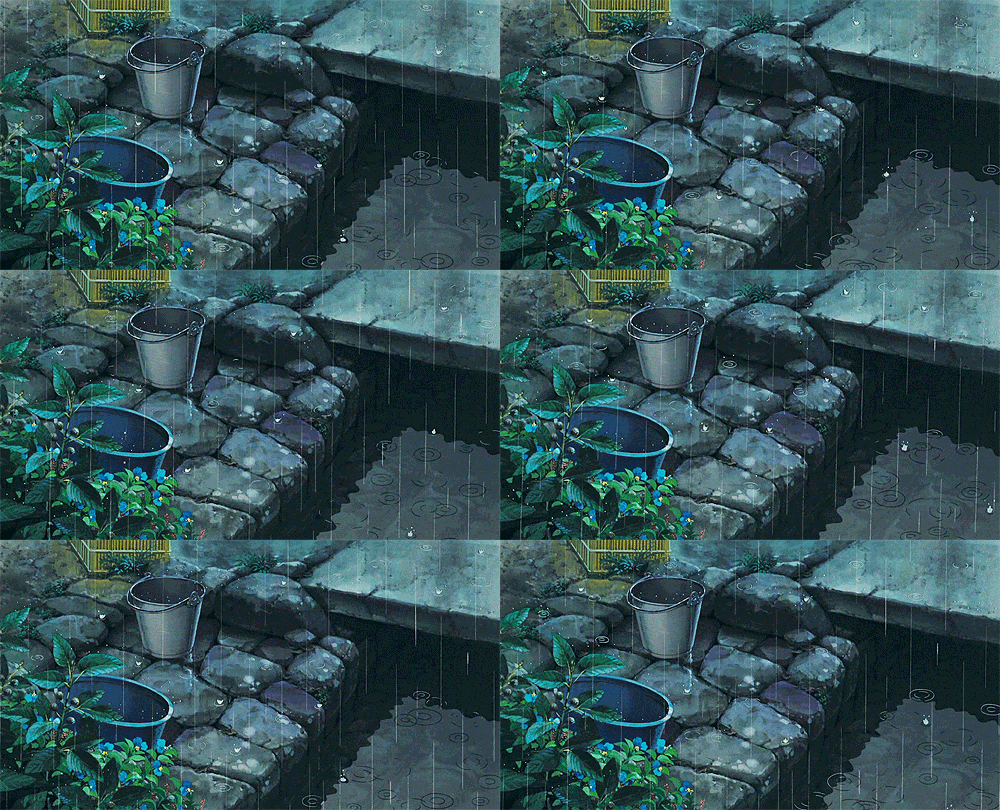
The rainy season usually wraps up in the first half of July. Then the heat and humidity arrive. Tokyo averages around 29°C (84°F), and Osaka can reach 31°C (88°F).
There’s plenty happening: summer festivals, fireworks, beach days in Okinawa, and the start of Mount Fuji’s climbing season. Hokkaido and higher-altitude areas are more comfortable if you want to spend lots of time outdoors. Summer school holidays begin toward the end of July, so travel gets busier.
August
| City | Average Daytime High |
Average Nighttime Low |
Rainy/Snowy Days | Sunny Days | ||
|---|---|---|---|---|---|---|
| Early month | Late month | Early month | Late month | |||
| Sapporo | 26°C (79°F) | 19°C (66°F) | 25% | 30% | 50% | 50% |
| Tokyo | 31°C (88°F) | 24°C (75°F) | 25% | 25% | 55% | 50% |
| Takayama | 31°C (88°F) | 20°C (68°F) | 35% | 35% | 60% | 60% |
| Osaka | 33°C (91°F) | 25°C (77°F) | 20% | 25% | 70% | 70% |
| Fukuoka | 32°C (90°F) | 25°C (77°F) | 25% | 30% | 65% | 60% |
| Okinawa (Naha) | 31°C (88°F) | 26°C (79°F) | 40% | 35% | 70% | 75% |
August is hot and humid across much of Japan. Tokyo averages around 31°C (88°F), and Osaka around 33°C (91°F). If you’re visiting, pace yourself, drink water, and plan breaks from the heat.
It’s a lively month for festivals and fireworks, but it’s also one of the busiest. School holidays are in full swing, and travel gets especially busy around Obon in mid-August. Hokkaido and mountain areas can offer a cooler escape.
September
| City | Average Daytime High |
Average Nighttime Low |
Rainy/Snowy Days | Sunny Days | ||
|---|---|---|---|---|---|---|
| Early month | Late month | Early month | Late month | |||
| Sapporo | 22°C (72°F) | 14°C (57°F) | 30% | 35% | 50% | 55% |
| Tokyo | 27°C (81°F) | 21°C (70°F) | 35% | 40% | 40% | 35% |
| Takayama | 26°C (79°F) | 16°C (61°F) | 40% | 40% | 45% | 45% |
| Osaka | 29°C (84°F) | 21°C (70°F) | 30% | 35% | 60% | 50% |
| Fukuoka | 28°C (82°F) | 21°C (70°F) | 35% | 30% | 55% | 55% |
| Okinawa (Naha) | 30°C (86°F) | 25°C (77°F) | 35% | 40% | 70% | 65% |
September can still feel like summer, with Tokyo averaging around 27°C (81°F). It’s also peak typhoon season. Storms can bring strong winds and heavy rain, so keep your plans flexible and check local updates while you’re there.
The upside? Tourist spots are often less crowded than in peak summer. A typhoon may pass quickly, and clear weather can follow, but it’s smart to leave some room in your itinerary.
October
| City | Average Daytime High |
Average Nighttime Low |
Rainy/Snowy Days | Sunny Days | ||
|---|---|---|---|---|---|---|
| Early month | Late month | Early month | Late month | |||
| Sapporo | 16°C (62°F) | 7°C (45°F) | 35% | 40% | 60% | 50% |
| Tokyo | 22°C (72°F) | 15°C (59°F) | 35% | 30% | 40% | 55% |
| Takayama | 20°C (68°F) | 9°C (48°F) | 35% | 30% | 45% | 55% |
| Osaka | 23°C (73°F) | 15°C (59°F) | 30% | 25% | 55% | 65% |
| Fukuoka | 23°C (73°F) | 15°C (59°F) | 20% | 20% | 60% | 65% |
| Okinawa (Naha) | 28°C (82°F) | 23°C (73°F) | 25% | 25% | 65% | 65% |
October is one of the easiest months for comfortable sightseeing. The heat and humidity start to fade, while daytime temperatures in Tokyo average around 22°C (72°F).
Autumn colors begin in northern Japan and higher-altitude areas, making this a great time for a city-and-nature trip. Pack a light jacket for cooler evenings.
November
| City | Average Daytime High |
Average Nighttime Low |
Rainy/Snowy Days | Sunny Days | ||
|---|---|---|---|---|---|---|
| Early month | Late month | Early month | Late month | |||
| Sapporo | 8°C (46°F) | 1°C (34°F) | 45% | 45% | 40% | 35% |
| Tokyo | 17°C (63°F) | 10°C (50°F) | 25% | 20% | 55% | 60% |
| Takayama | 13°C (55°F) | 2°C (36°F) | 35% | 35% | 45% | 40% |
| Osaka | 17°C (63°F) | 10°C (50°F) | 20% | 20% | 60% | 60% |
| Fukuoka | 18°C (64°F) | 10°C (50°F) | 30% | 25% | 55% | 50% |
| Okinawa (Naha) | 24°C (75°F) | 20°C (68°F) | 25% | 30% | 55% | 45% |
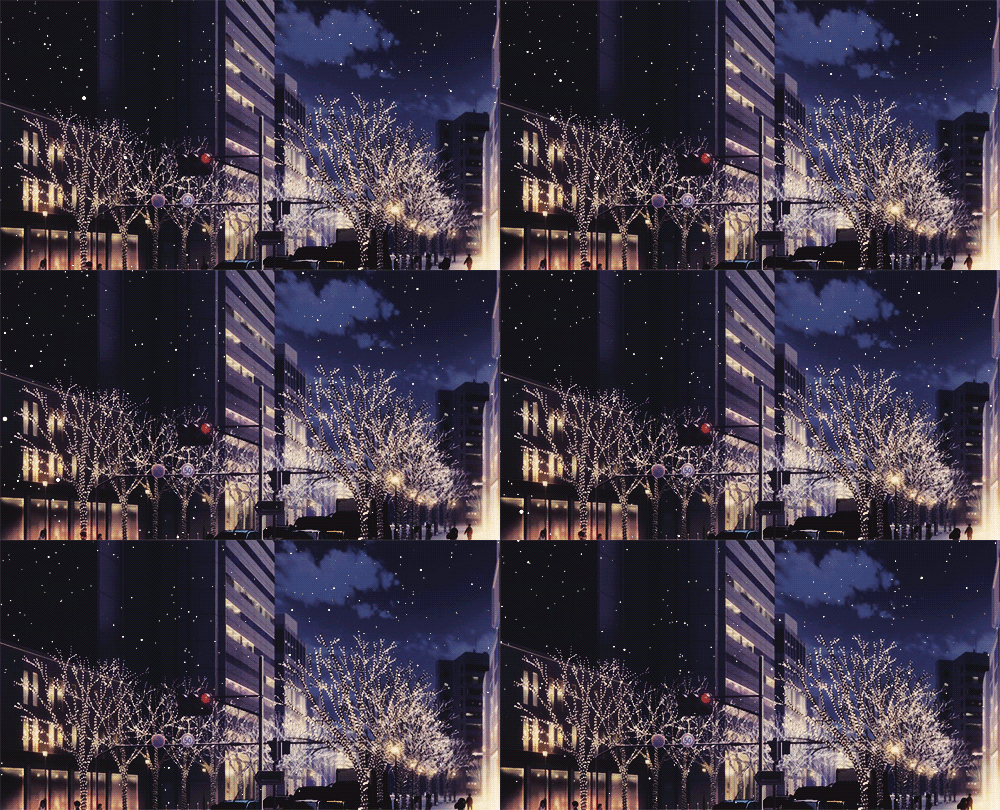
November is another standout month. The weather is usually mild and relatively dry, and autumn leaves bring brilliant color to parks, temples, and mountain landscapes.
December
| City | Average Daytime High |
Average Nighttime Low |
Rainy/Snowy Days | Sunny Days | ||
|---|---|---|---|---|---|---|
| Early month | Late month | Early month | Late month | |||
| Sapporo | 2°C (36°F) | -4°C (25°F) | 50% | 50% | 35% | 35% |
| Tokyo | 12°C (54°F) | 5°C (41°F) | 15% | 10% | 65% | 75% |
| Takayama | 6°C (43°F) | -2°C (28°F) | 40% | 40% | 35% | 35% |
| Osaka | 12°C (54°F) | 5°C (41°F) | 20% | 15% | 65% | 65% |
| Fukuoka | 13°C (55°F) | 5°C (41°F) | 30% | 25% | 45% | 45% |
| Okinawa (Naha) | 21°C (70°F) | 16°C (61°F) | 25% | 30% | 45% | 40% |
Tokyo averages around 17°C (63°F) during the day. Most places are fairly calm, though popular autumn-leaf spots can get busy. If those colorful views are on your list, plan ahead for the most famous locations.

December is generally dry and quieter during the first half of the month. Tokyo averages around 12°C (54°F) by day, while Sapporo is much colder, at about 2°C (36°F).
The days are short, but the ski season gets going and winter has its own charm. If you’re visiting near New Year, remember that some attractions close from around December 29. Check opening dates before you go.
So, when should you visit?
For mild weather and seasonal scenery, April, May, October, and November are great bets. Pick January or February for snow and winter sports, July or August for festivals and beach time, or June for a slower trip with a rain jacket packed.
There isn’t one perfect month for everyone. Think about what you want to see, how you feel about heat or cold, and how much you want to plan around crowds. Japan has something special going on in every season.
Temperature and seasonal information adapted from Japan Meteorological Agency averages. Rainy days are days with at least 1 mm of rain; sunny days are days with sunshine for at least 40% of daylight.